 CPG, Business & Scale-Up
The Fall of CPG Foods: Behind the "Better-for-You" Label
A healthy label does not change an ultra-processed formula. A closer look at protein engineering, EPG, sweeteners, and the recipes behind familiar brands.
Whole Foods Market has printed a compelling promise on its shopping bags: “It’s what’s not in the bag.” The company’s food standards exclude more than 300 ingredients from food sold in its stores. That is meaningful curation, and it gives shoppers a useful starting point.
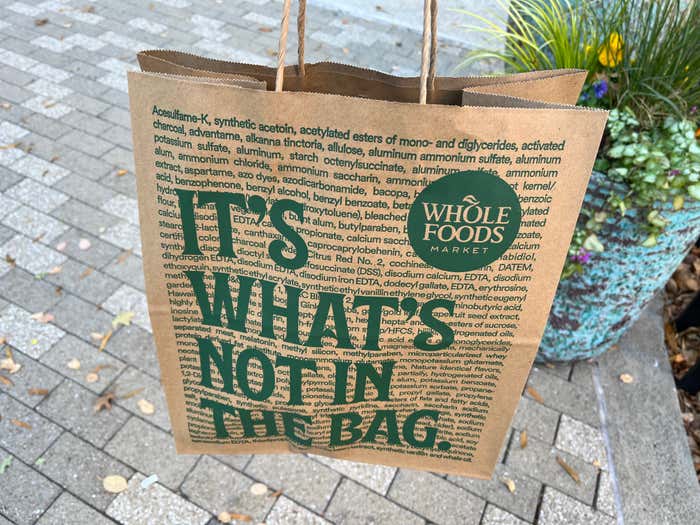
But the bag raises a second question: what is in the package?
In the modern CPG aisle, a product can clear a retailer’s exclusion list and still be engineered around a narrow set of targets: fewer calories, more protein, less sugar, a familiar texture, a specific flavor, and a long shelf life. None of those targets is inherently wrong. The problem comes when the front-of-pack shorthand becomes the entire conversation.
The problem is the health halo. Organic ingredients, an impressive protein number, a botanical extract, or a trusted founder can make an entire product seem healthier than its formulation warrants. The bars and drinks built from these isolated inputs and flavor systems are still ultra-processed foods, with a “healthy” label and good marketing. Read the ingredients as carefully as the promise.
The back of the package tells a different story
FDA rules require ingredients to be listed in descending order by weight. That makes the ingredient statement one of the few places where a shopper can see the product as a system rather than as a claim. It does not reveal dose, processing method, or every interaction between ingredients. It does, however, tell you what the manufacturer needed to build the product.
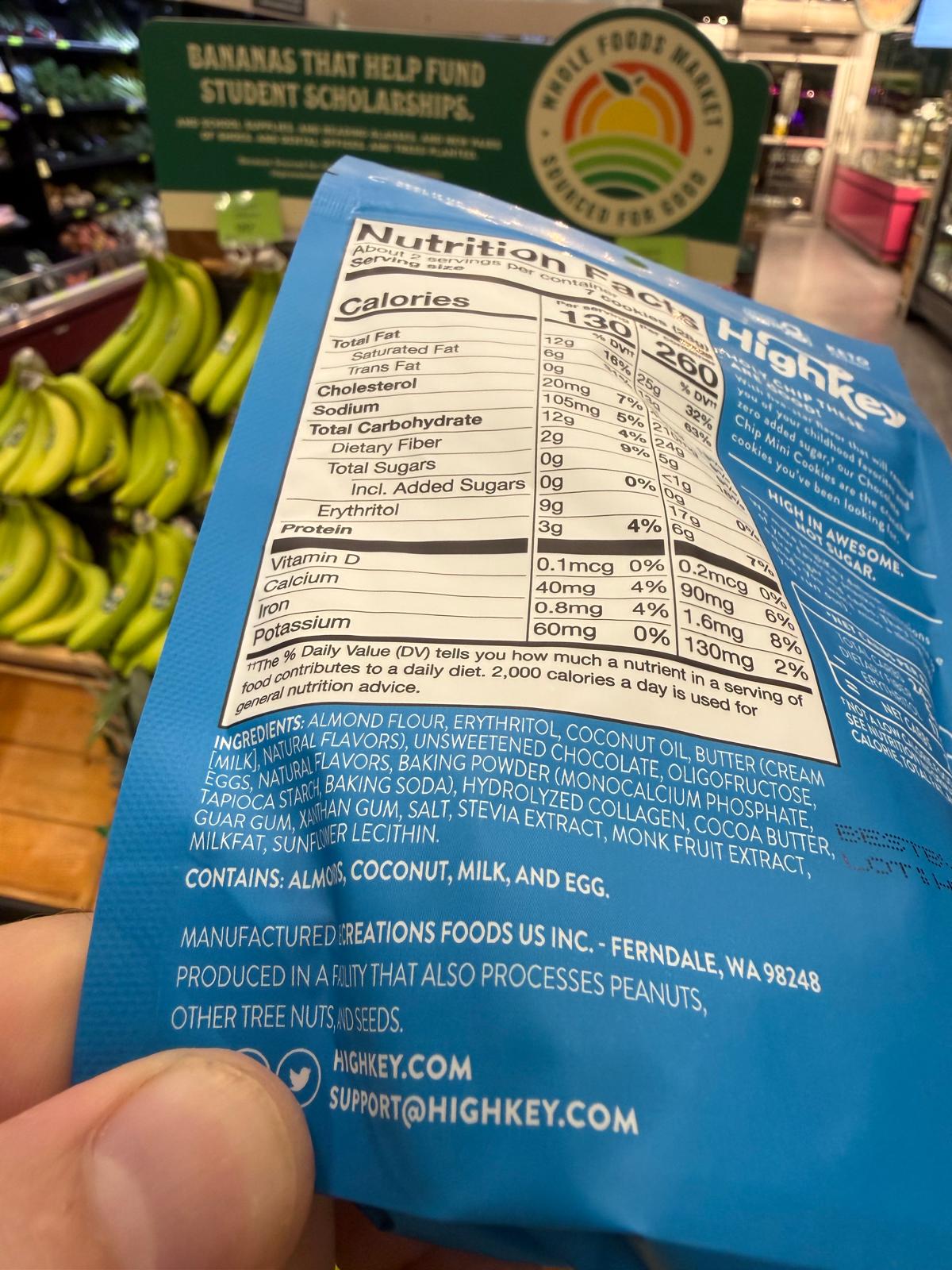
A short ingredient list can be a good sign. It is not a verdict. A longer list is not automatically a problem either. The point is to read the list as a functional map.
A practical taxonomy for reading CPG labels
Many products in the “better-for-you” aisle are built from four overlapping systems.
1. Protein inputs
Whey protein isolate, pea protein, garbanzo bean protein, pumpkin protein, sunflower protein, collagen, and egg white can raise protein density in a small serving. They also change flavor, texture, water binding, and digestibility. That is why high-protein products often need other ingredients to stay soft, stable, and palatable.
2. Texture and structure
Gums, emulsifiers, and stabilizers help a bar hold together and a beverage stay uniform. Examples include sunflower or soy lecithin, guar gum, xanthan gum, acacia gum, alginic acid, carrageenan, cellulose gum, mono- and diglycerides, sodium alginate, ammonium phosphatide, polysorbates, and glycerol stearate. These ingredients do not all work the same way, and they should not be treated as one risk category. Their presence does explain how a product can look and feel consistent after months in distribution.
3. Sweetness and calorie reduction
Erythritol, allulose, monk fruit extract, stevia leaf extract, sucralose, sorbitol, mannitol, maltitol, and xylitol let manufacturers create sweetness with fewer calories or less declared sugar. That can be helpful for some people. It can also create a very different digestive experience from eating fruit, grains, or other carbohydrate foods.
4. Shelf life and preservation
Ascorbic acid, citric acid, rosemary extract, nisin, BHT, calcium disodium EDTA, sodium bisulfite, calcium benzoate, sodium diacetate, propionic acid, sodium lactate, butyric acid, and calcium sorbate can help manage oxidation, microbial stability, or consistency. “Natural” and “synthetic” do not reliably distinguish good from bad here. The relevant question is simpler: what manufacturing problem is this ingredient solving, and is this product worth that trade-off for you?
Macro targets are not a full nutrition profile
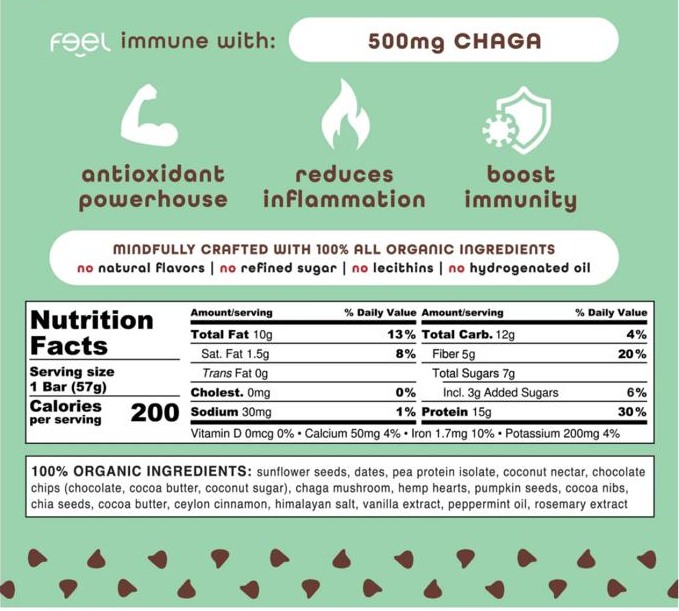
Protein, carbohydrate, fat, calories, and added sugar matter. But they do not capture the entire food matrix. They say little about food structure, potassium, magnesium, polyphenols, anthocyanins, fermentable fiber, or the variety of plant compounds that arrive with minimally processed foods.
The result is an odd modern trade: a product can be optimized to look excellent in a macro tracker while contributing little of the dietary diversity that supports long-term eating patterns. A 20-gram protein bar may be useful after a workout or on a rushed travel day. It should not quietly replace the meals that would otherwise bring vegetables, fruit, legumes, intact grains, and varied fibers into the week.
A useful amount of protein does not replace the rest of a meal. Nutrient density includes vitamins, minerals, electrolytes, and a variety of food compounds, including carotenoids and polyphenols such as anthocyanins. Those are different families of compounds, not interchangeable antioxidant points on a scorecard. Chasing protein while losing food variety is a poor trade.
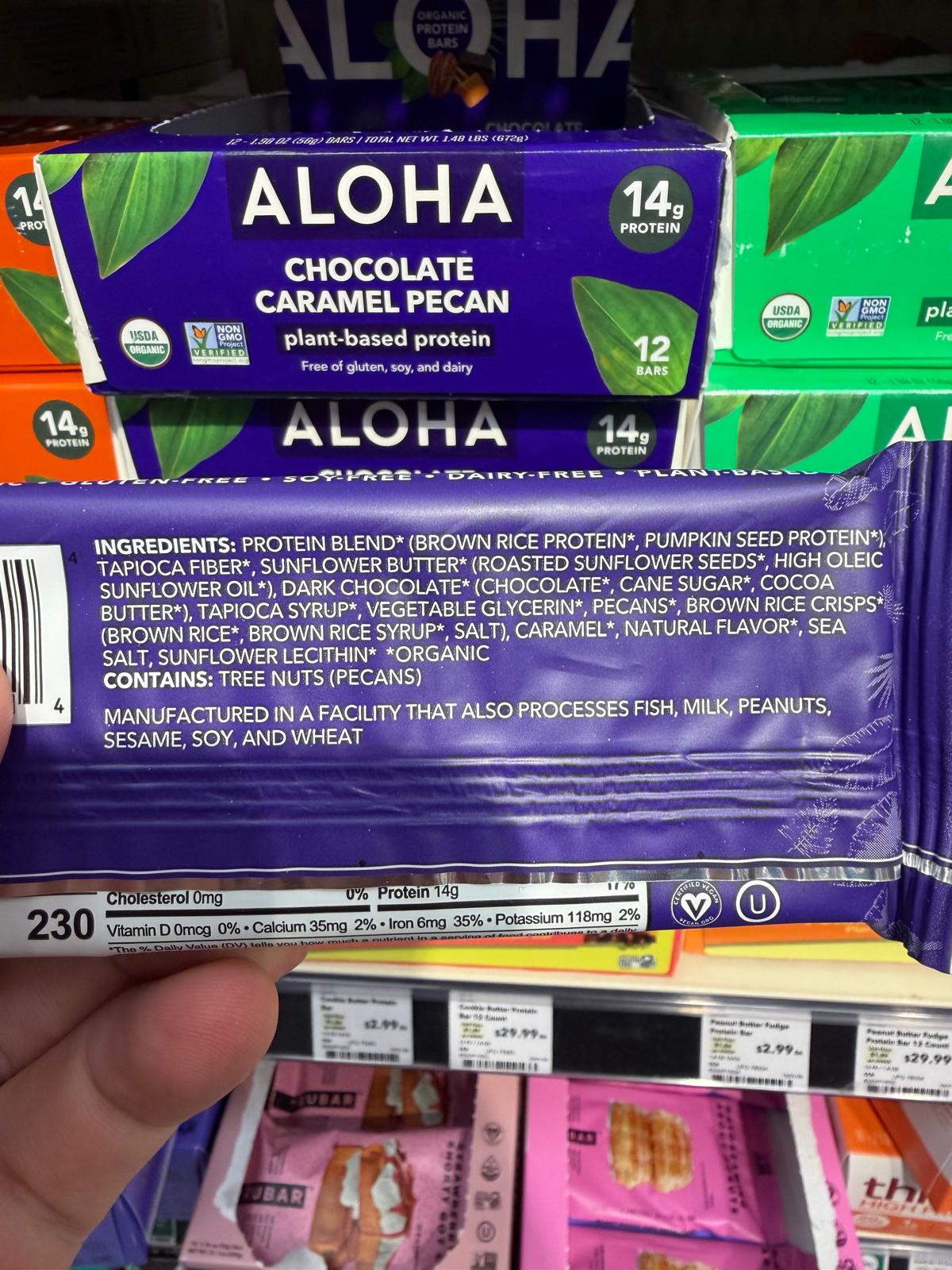
The ALOHA wrapper makes the architecture visible: a brown rice and pumpkin seed protein blend, tapioca fiber, sunflower butter, tapioca syrup, vegetable glycerin, natural flavor, and sunflower lecithin. Organic certification describes how qualifying ingredients are produced. You still need to decide whether this assembled bar is serving as a convenient snack or replacing more varied food.
GLP-1s and the idea that every bite counts more
GLP-1 medications have given CPG companies another reason to chase small portions with large protein numbers. This is an explicit commercial strategy. In 2024, Nestlé introduced Vital Pursuit for GLP-1 users and people managing their weight, emphasizing high protein and portions aligned with a smaller appetite.
When someone eats fewer bites, each bite has to do more nutritional work. That makes the distinction between protein density and overall nutrient density more important. A brand can deliver a striking protein-to-calorie ratio while doing little to replace the vitamins, minerals, essential fats, fiber, and food variety that a smaller diet can lose.
The 2025 joint nutrition advisory from four professional societies puts adequate protein alongside nutrient-dense, minimally processed diets, prevention of micronutrient deficiencies, and strength training. Protein matters. It cannot carry the entire nutrition brief.
“Every bite counts” should mean protecting nourishment in the food you still eat. It should not become permission to strip a product down until one macro looks exceptional.
Why so many new products feel familiar
Startups often enter a category with a real belief that they can make a better product. The operational reality is harder. A limited number of co-manufacturers can handle small minimum orders, rapid launches, flavor development, shelf-life work, and turnkey production. They serve many brands at once.
That is why the aisle can produce so many near-identical forms: a slab bar or extruded bar with crisp inclusions, a high-protein shake, or a low-sugar functional drink. The branding is different. The ingredient architecture often converges because the manufacturing constraints converge too.
This is not a conspiracy. It is a supply-chain fact. Manufacturers are solving for cost, throughput, shelf life, texture, and a target nutrition panel. When the goal is 15 to 30 grams of protein in a small package, low sugar, a soft bite, and a long shelf life, the formulation has to work hard.
Functional beverages: an adaptogen does not change the formula
Functional drinks frequently pair botanicals or mushroom extracts with sweeteners, acids, gums, emulsifying agents, flavors, color, and preservatives. An ingredient like lion’s mane, ashwagandha, maca, or L-theanine may drive the brand story, but it does not turn the rest of the formula into a health food.
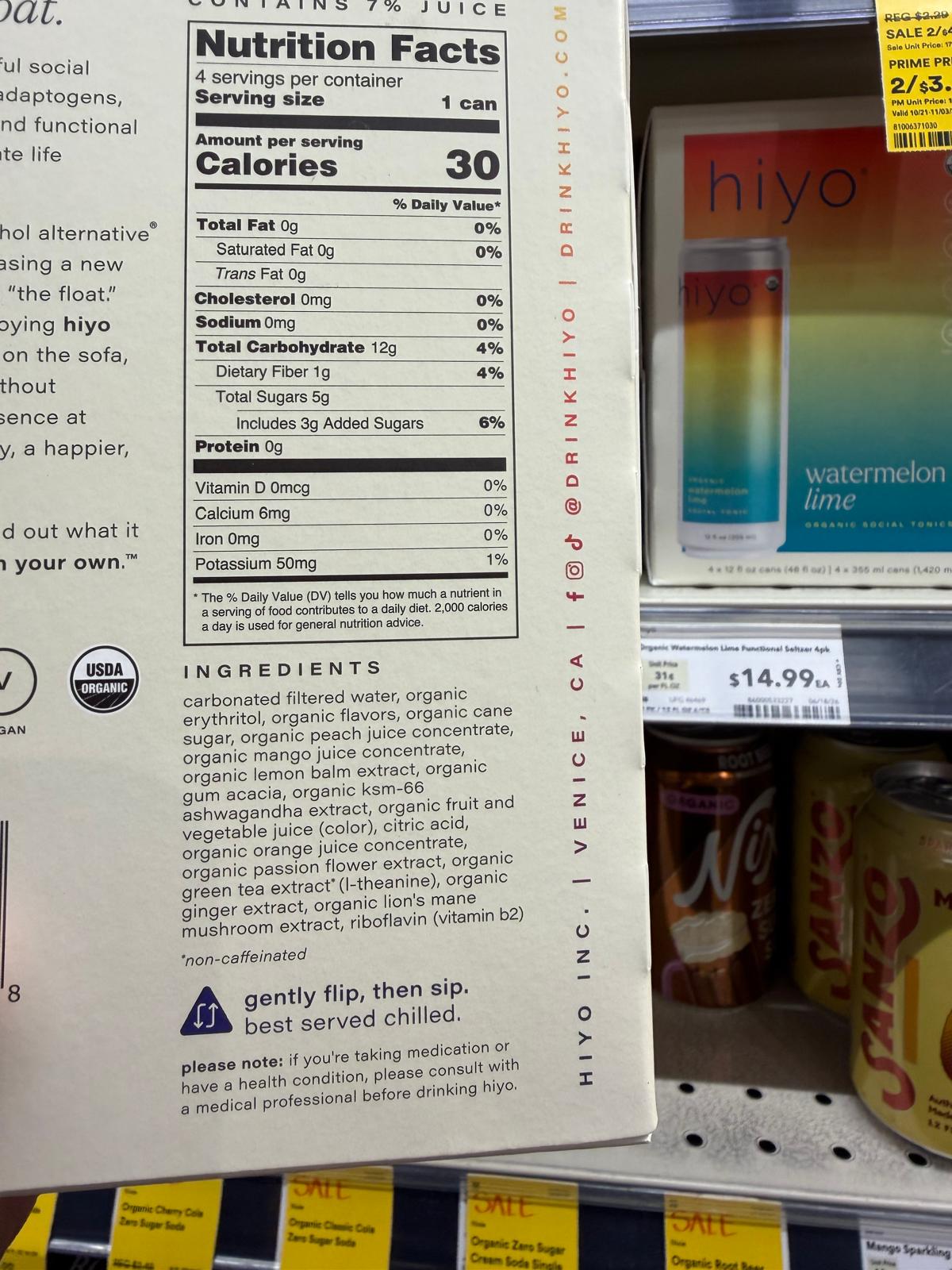
An adaptogen on the label does not change the processing behind the drink. The sweeteners, emulsifying agents, alternative proteins or fats, preservatives, acids, and flavor systems are doing the work that makes it shelf-stable and palatable. These are still ultra-processed foods, often sold with a healthy label and good marketing.
The Hiyo carton illustrates the point. Erythritol appears near the start of the list, followed by flavors, cane sugar, juice concentrates, and a collection of extracts. Organic acacia gum helps complete the formula. The organic badge and the botanical story do not erase the sweetener and formulation systems alongside them.
A zero-proof drink can be useful as an occasional alternative to alcohol. That use does not establish the nutritional value of the complete drink or turn an adaptogen into evidence for the whole formula.
Zero calories and the clean-label halo
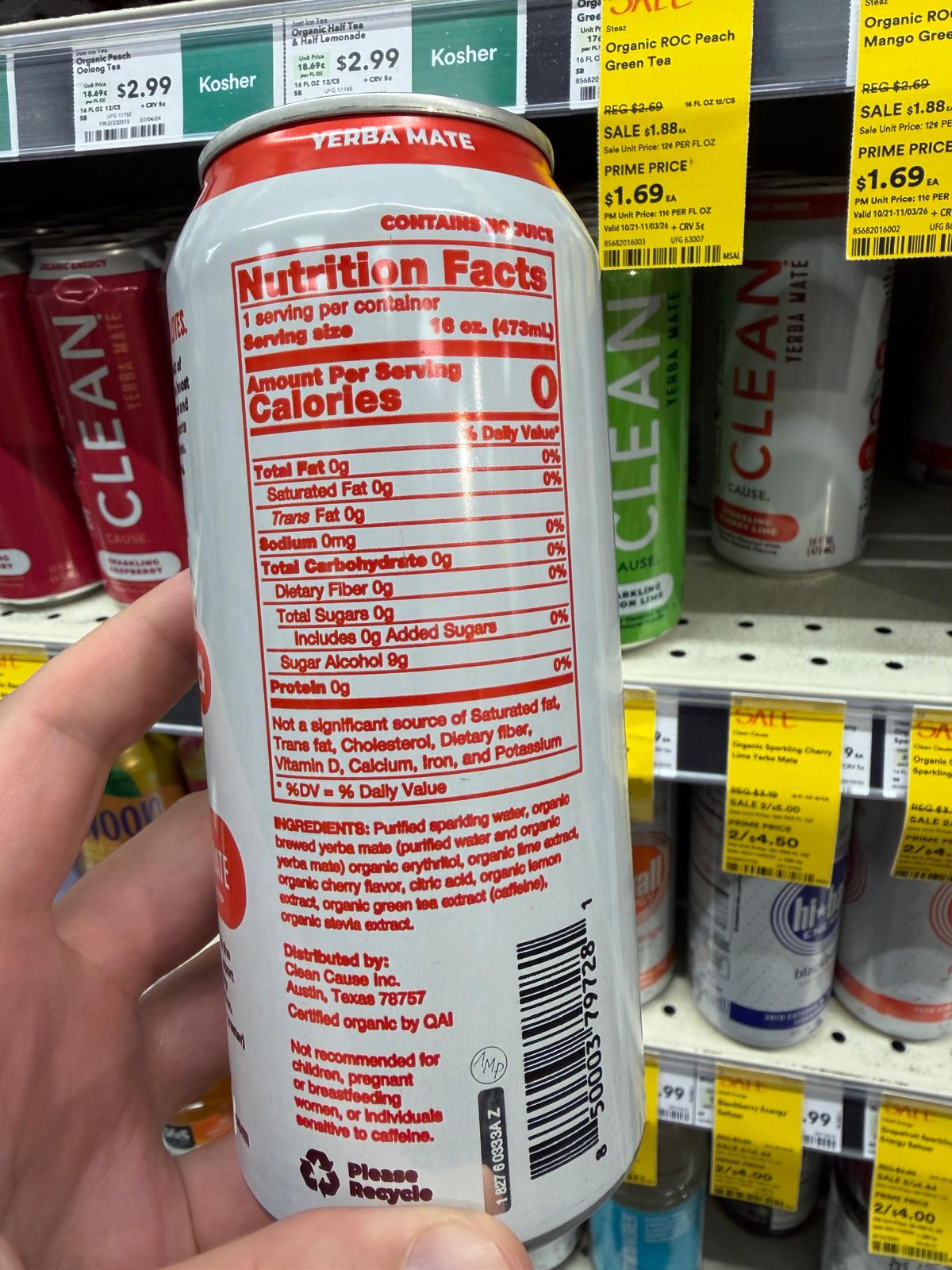
The CLEAN Cause can shows zero calories and 8 grams of sugar alcohol per serving. Its ingredients include organic erythritol and organic stevia extract. The word “clean” cannot tell you how much sweetener you are drinking or whether it agrees with you. The back of the can can.
Replacing sugar with erythritol or stevia changes how a company delivers sweetness. It can reduce sugar or calories. It does not, by itself, establish a health benefit for the finished beverage. A label can be technically accurate and still invite a much bigger conclusion than the numbers support.
Sweeteners, digestion, and the microbiome: be curious, not categorical
Sugar alcohols are not metabolized like sucrose. Some are slowly or incompletely absorbed. The FDA notes that larger amounts can cause gas, bloating, or diarrhea in some people, and foods containing certain amounts of sorbitol or mannitol require a laxative-effect warning. That is a dose and individual-tolerance issue, not a moral failing or proof that every sugar-free product is harmful.
Allulose is a rare sugar that the FDA allows to be excluded from “Total Sugars” and “Added Sugars” on the Nutrition Facts label under its guidance, while still contributing calories at a specified factor. That labeling treatment can make a product appear lower in sugar than a shopper expects from the ingredient list. Controlled human studies have also reported more gastrointestinal symptoms at sufficiently high doses. The reasonable takeaway is not to panic about allulose. It is to start with a realistic serving, pay attention to tolerance, and avoid treating a low-sugar label as permission for unlimited intake.
Stevia glycosides, monk fruit extracts, sucralose, allulose, and sugar alcohols are chemically and metabolically distinct. Research on non-sugar sweeteners and the gut microbiome is active, mixed, and strongly shaped by dose, diet, study design, and the specific compound. It does not justify a blanket claim that all sweeteners damage the microbiome. It does justify more humility than the front of a can usually offers.
Your gut microbiome is important, but it is not a single on/off health switch. Dietary pattern, fiber variety, medications, alcohol, sleep, stress, and individual biology all matter. A useful starting point is to notice whether a product repeatedly leaves you bloated, uncomfortable, or chasing sweetness, then adjust rather than outsource your judgment to marketing.
David Bar, EPG, and the limits of macro engineering
David is a concentrated version of this problem. Its Chocolate Chip Cookie Dough bar advertises 28 grams of protein, 150 calories, and zero grams of sugar. The ingredient list organizes the formula into protein, binding, fat, and flavor systems. Modified plant fat, identified as EPG, sits in the fat system. Maltitol and allulose help build the binding system.
Those numbers attract attention because they make an easy comparison at the shelf. They tell you much less about the nutritional value of replacing a meal with the bar. A high protein-to-calorie ratio measures one design target. It does not measure the quality of the diet around it.
The founder halo and the supply-chain moat
Peter Rahal is the RXBAR cofounder behind David. David investor Valor points to his earlier business and its 2017 acquisition by Kellogg as part of the new company's story. That history gives shoppers and investors an understandable reason to pay attention. Trust earned by an earlier brand can transfer before anyone has examined the new formula.
That is the halo I am concerned about. Founder credibility, prominent partners, distribution, and a memorable nutrition panel can reinforce one another. A company can execute brilliantly and sell a product whose role in a healthy diet still deserves scrutiny. An exit is a business result. It is not a nutritional credential that carries over to the next recipe.
In May 2025, David acquired Epogee, the EPG supplier. A February 2026 federal court decision describes three former customers receiving notices that their accounts were being wound down and new orders would stop. Those companies challenged the arrangement. The court dismissed their complaint and denied a preliminary injunction in that decision; the allegations should not be presented as a finding of unlawful conduct.
Owning a scarce input can secure production and make competitors' lives harder. From a business perspective, that is a powerful move. From a shopper's perspective, control of the supply chain offers no answer about nutrient uptake, tolerance, or whether the resulting bar should replace lunch.
What EPG does, and what GRAS does not settle
EPG stands for esterified propoxylated glycerol. Manufacturers modify a fat-like molecule to limit its digestion, retaining useful texture with fewer absorbed calories. That is the point of the ingredient. It also makes its interaction with fat-soluble nutrients a reasonable question.
The regulatory history predates David. Choco Finesse submitted GRAS Notice 640, and FDA issued a “no questions” response in 2016 about the notifier's GRAS conclusion for specified uses. Describing EPG as only a self-affirmed decision made by David would miss that record. FDA also stated that it had not made its own GRAS determination.
That process addresses the ingredient under stated conditions of use. It does not establish that an EPG bar improves health, supplies complete nutrition, or has been studied for years of daily consumption with human microbiome outcomes. Regulatory status and nutritional value answer different questions.
Carotenoids, gastrointestinal effects, and the evidence gap
In a 2014 randomized, double-blind, eight-week study, 139 healthy volunteers received foods providing 10, 25, or 40 grams of EPG a day, or margarine as a control. Circulating beta-carotene and vitamin K1 were lower in the EPG groups. Retinol, the measured form of vitamin A, and alpha-tocopherol, a form of vitamin E, did not show significant overall effects. This supports concern about particular fat-soluble nutrients, rather than a claim that EPG blocks all vitamins or antioxidants.
The same study reported more diarrhea, oily spotting, and other gastrointestinal symptoms at 25 and 40 grams a day; the authors considered 10 grams a day reasonably well tolerated. These were EPG doses in test foods, not a trial of David bars. You cannot turn those dose groups into a claim about the effects of a single bar.
The manufacturer's later GRAS submission, which summarizes that work, discusses a possible lipid “sink” during digestion and lower dietary fat intake as explanations for the beta-carotene findings. It also distinguishes forms of EPG with different physical properties. The results warrant attention, but they do not establish a universal effect across every carotenoid, EPG formulation, or eating pattern.
Loose or oily stools are relevant tolerance findings. They do not establish a mechanism involving disrupted water absorption, and these studies did not establish the long-term microbiome effects of eating David bars. Resistance to digestion also does not tell us, by itself, whether an ingredient harms gut microbes. Repeated use, different diets, and combined exposure to the rest of the formula deserve direct study. The existing evidence leaves those questions open.
A protein tool still leaves a nutrition job unfinished
David's label describes fat, carbohydrate, fiber, and some micronutrients alongside the protein. Yet the product's central proposition remains an extreme protein-to-calorie target. A varied meal has a much larger nutritional job than delivering that number.
If an engineered bar repeatedly displaces vegetables, legumes, fruit, intact grains, and other foods, those missing foods matter even when the bar hits its macro claim. Protein density should not become an excuse to compromise the rest of your nutrition. I have little interest in a Soylent Green future, minus the people, where eating becomes an exercise in assembling isolated inputs and congratulating ourselves on the label.
Use a convenience product with a clear job. Keep actual meals in the diet. Neither a famous founder nor an unusually efficient formula can do that work for you.
When a familiar brand changes the recipe
The health halo can also outlive a formula. You learn to trust a product, buy it repeatedly, and stop turning the package over. A company can change the ingredients while retaining the name, color scheme, and accumulated goodwill.
That is where the idea of enshittification fits: the customer keeps buying the reputation of an earlier product while the company changes what it delivers. When a reformulation lowers costs without passing savings to shoppers, the brand can capture the difference. An ingredient list alone, however, cannot establish the manufacturer's costs or profit margin. It can show that the recipe you trusted has changed.
Cholula: compare the actual ingredient lists
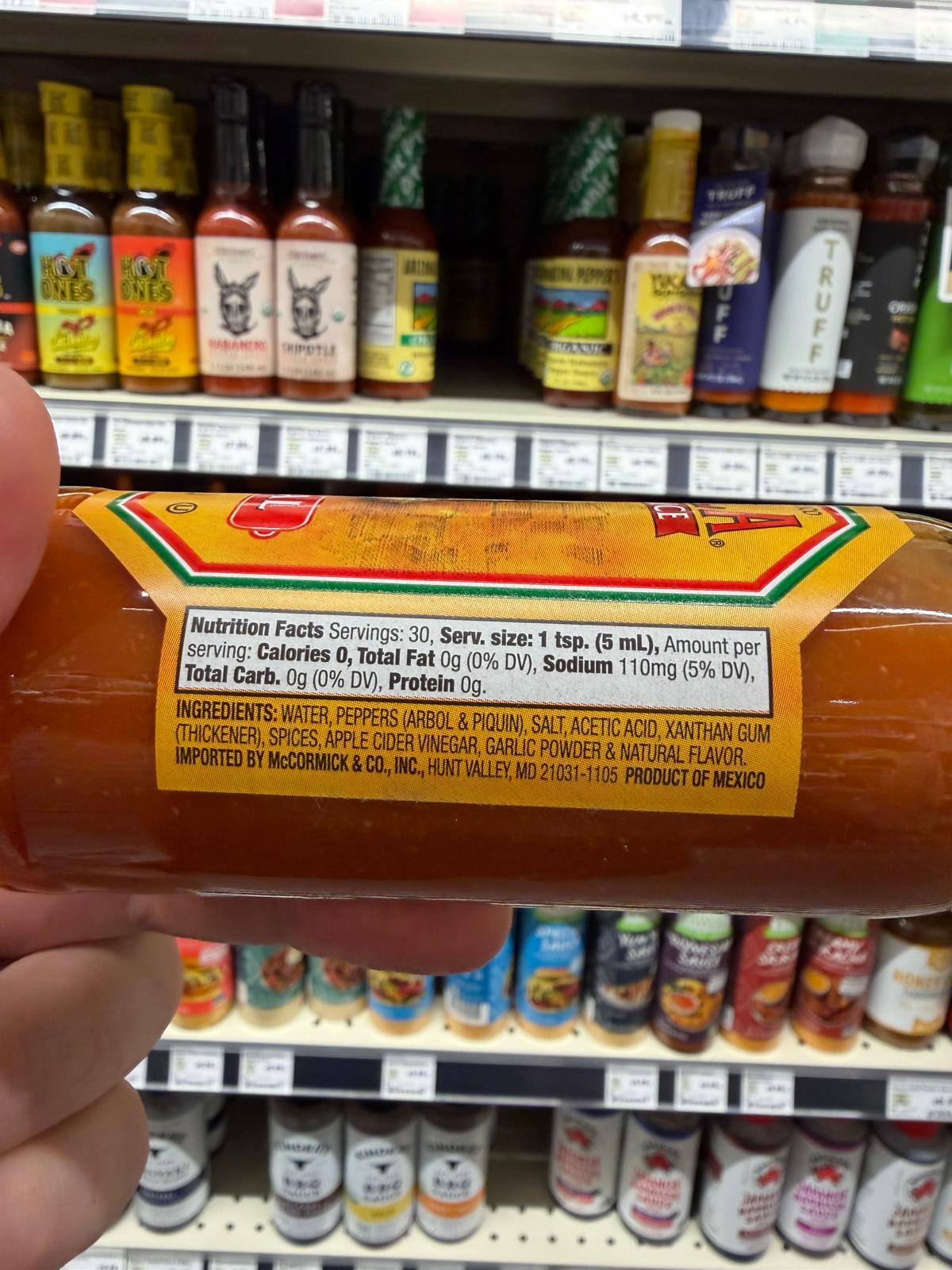
McCormick completed its acquisition of Cholula in November 2020. An older manufacturer data sheet, carrying 2020 and 2021 dates, lists water, peppers, salt, vinegar, garlic powder, spices, and xanthan gum.
The photographed bottle and current manufacturer listing list acetic acid separately, retain apple cider vinegar farther down, and include natural flavor. Water and xanthan gum were already in the older recipe. The documented change is not the arrival of water or gum, and vinegar has not disappeared completely.
That distinction matters because a precise criticism is harder to dismiss. Shoppers can reasonably object to a changed acid and flavor system in a product they bought for its established taste. The two lists document a reformulation; they do not, on their own, prove the new sauce is harmful or reveal the savings behind it.
Annie's: the five-year comparison
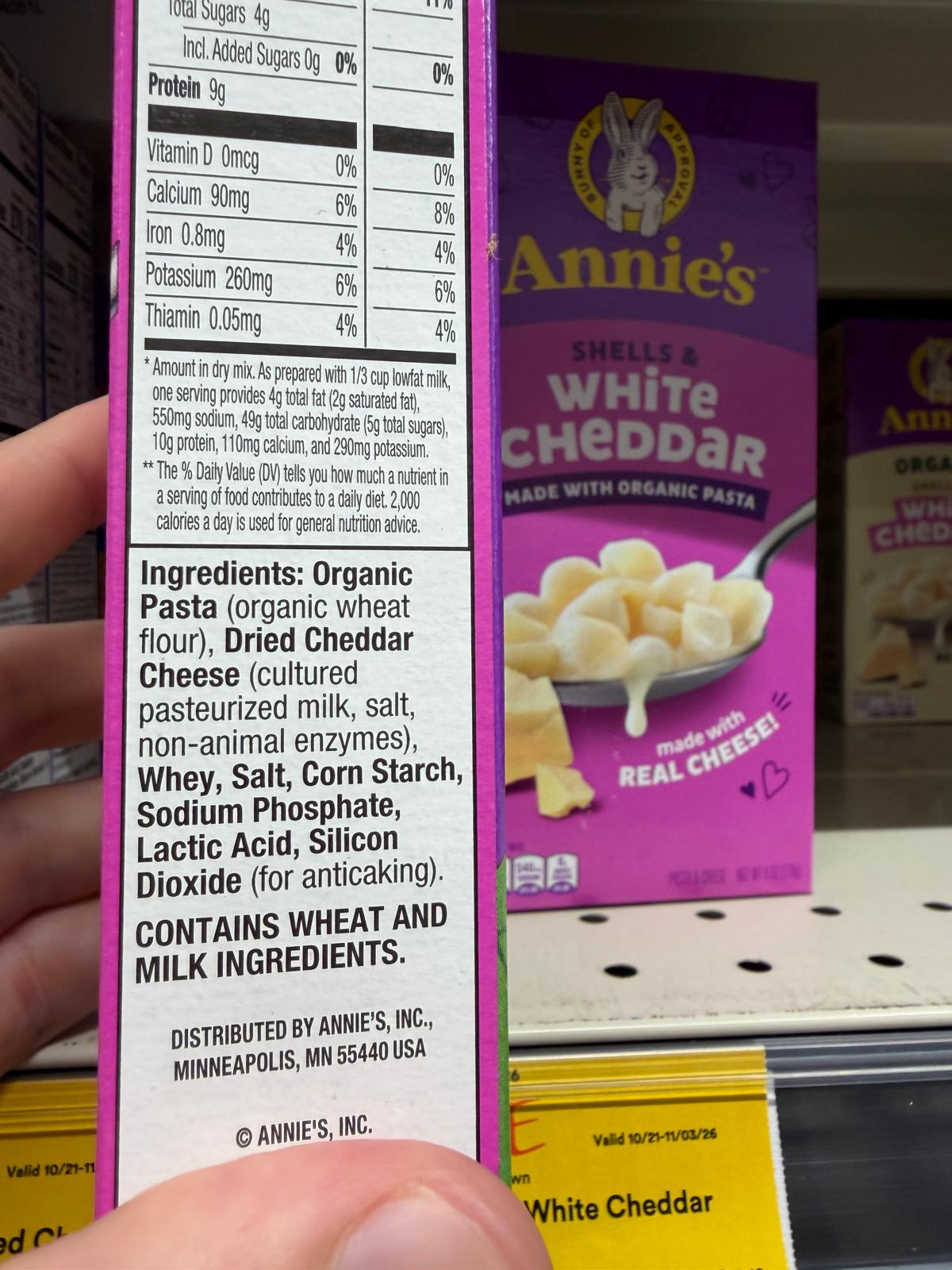
The September 2021 archived Annie's product page lists butter and nonfat milk after whey. The current page, matching the photographed box, omits both and lists corn starch and lactic acid. That is a substantive change in the cheese-sauce formula. The ingredient order does not tell us the exact quantities or how much thickener changed.
Silicon dioxide serves as an anticaking agent in both versions. It was already part of the product five years ago. The clear before-and-after evidence is the removal of butter and nonfat milk and the appearance of corn starch and lactic acid.
General Mills acquired Annie's in 2014, years before that 2021 label. The ownership history belongs in the discussion, but the dates do not support a story that this recipe changed immediately on acquisition. The lesson for repeat buyers survives that correction: familiar packaging is not a guarantee of a familiar formula.
The next halo may be fiber and postbiotics
The protein-everything wave is connected to real consumer demand: people want more protein per bite, especially when appetite, time, or total calories feel constrained. As that market matures, expect more products with fiber claims, postbiotics, and microbiome language, potentially with less extreme protein positioning.
That shift could be beneficial. It can also become another round of formulation theater if the answer is simply another isolated input added to a highly engineered base. Fiber is not interchangeable with every other fiber. A postbiotic claim is not interchangeable with a diet rich in diverse plants. The whole package still matters.
Fresh vegetables and fruit are not perfect, and the food system has real problems involving soil health, farming practices, access, and affordability. Still, they remain the obvious baseline. They come with water, structure, fiber, and micronutrients that do not need a flavor system to be convincing.
A short framework for the grocery aisle
Before buying a food because it is high protein, low sugar, organic, or made for a specific retailer, pause for five questions:
- What is the product’s primary job in my day? A snack, a convenience tool, a meal replacement, or an everyday staple?
- What is the ingredient architecture? Identify the protein, sweetener, texture, and preservation systems.
- What is being optimized? Calories, macros, shelf life, cost, flavor, or convenience?
- How do I tolerate it? Pay attention to digestion, satiety, energy, and how often you reach for it.
- What whole foods is it displacing? If the answer is “most of them,” the product may be doing too much work in your diet.
Read the back of the package, including on products you have bought for years. Ask what changed and what the product is replacing in your diet. A founder's reputation, organic badge, adaptogen, or impressive macro claim cannot stand in for that work.
The takeaway for these engineered bars and drinks is straightforward: it is still ultra-processed food, with a “healthy” label and good marketing. Convenience has a place. Your nutrition deserves more than the halo.
Sources and further reading
- Whole Foods Market food ingredient standards
- FDA: Food labeling guide
- FDA: Types of food ingredients
- FDA: Sugar alcohols and the Nutrition Facts label
- FDA: Allulose labeling guidance
- FDA GRAS Notice 640: EPG as a fat replacer
- Systematic review: non-sugar sweeteners and the gut microbiome
- Human study: gastrointestinal tolerance of allulose
- David Chocolate Chip Cookie Dough: current nutrition and ingredients
- David investor profile: Peter Rahal, RXBAR, and Epogee
- Federal court decision concerning Epogee supply and the competitors' complaint, February 4, 2026
- FDA response letter for GRAS Notice 640
- Davidson and Bechtel, 2014: eight-week EPG nutrient and tolerance study
- GRAS Notice 761: manufacturer submission, including EPG nutrient and tolerance discussion
- Nestlé's 2024 Vital Pursuit launch for GLP-1 users
- Joint professional-society advisory: nutritional priorities during GLP-1 therapy
- Cholula's older manufacturer data sheet
- Cholula Original: current manufacturer ingredient list
- Annie's Shells and White Cheddar: September 2021 archived manufacturer page
- Annie's Shells and White Cheddar: current manufacturer ingredient list

Alex ShermanArticles by email